Intent-First Keyword Strategy: Stop Ranking for the Wrong Searches
Most B2B companies optimize for volume. They chase keywords with high search numbers, build content around them, and then wonder why traffic doesn't convert. The data is humbling: 96.55% of all web pages get zero organic traffic from Google, and intent mismatch is one of three root causes.
The path forward is clear: map intent before you choose keywords. Not all searches are created equal. A search for "content management system" means something entirely different depending on who's searching. A CRO director looking to implement a system has different needs than a freelance marketer researching options. A platform architect evaluating enterprise solutions is in a different universe from someone who googled the term by accident.
Only 0.44% of Google search users visit second-page results. This means first-page ranking is essential for capturing any high-intent traffic. But volume alone won't get you there.
The real opportunity lies in buyer intent signals. Long-tail keywords with 8+ words have 50% less competition and 20% higher conversion rates than shorter, more generic terms. More importantly, research shows that 70% of B2B buyer research happens off-site—in Slack channels, peer communities, and 1:1 sales conversations. When you map keywords to the actual pain points your sales team hears repeatedly, you're no longer guessing at intent. You're building a search strategy grounded in real buyer behavior.
Start by conducting what we call a "buyer research audit." Sit with your sales team. What questions do prospects ask on discovery calls? What objections come up repeatedly? What terminology do high-fit prospects use when they first engage? These insights reveal high-intent keyword opportunities that generic keyword tools will never surface. Then validate your intent hypothesis: check the top-ranking pages for each keyword. If they're thin blog posts and your content is comprehensive service pages backed by case studies, you've found a positioning mismatch worth exploiting.
For B2B SaaS specifically, this matters more than anywhere else. Ranking for a keyword with 500 monthly searches but high transactional intent can be far more profitable than ranking for 5,000 searches with purely informational intent. The difference between capturing a research-stage buyer and a ready-to-buy buyer is often measured in millions of dollars of revenue. Your keyword strategy should reflect that math.
Use your Messaging Intel tool to analyze competitor keyword positioning and understand what intent signals the top performers are targeting. Then use your Content SEO Analyzer to validate that your content is actually addressing the intent drivers for your target keywords. Misalignment here is silent revenue loss.
Content Briefs That Ship: Blueprints Over Rewrites
The average marketing team rewrites content three times. Once by the writer who thought they understood the assignment. Once by the editor who clarifies what was actually needed. Once more when the SEO person realizes the content isn't optimized correctly. That's not a workflow. That's waste.
The solution is a structured content brief that functions as a contract between stakeholders. Not a vague set of talking points, but a detailed specification that reduces rewrite cycles by 60-70%. This isn't new—advertising agencies have used creative briefs for decades—but most B2B content teams skip this step, paying for it in velocity and quality.
Well-defined content briefs cut down on the need for extensive rewrites and revisions by establishing standardized production processes. Teams with documented brief templates ship content 40% faster than teams operating ad-hoc.
A production-grade brief includes seven non-negotiable elements. First: keyword intent and SERP positioning. Show the writer what's ranking in the top 5. What's working? What's missing? Where can you differentiate? Second: target audience persona and stage in buyer journey. A researcher needs different language, proof points, and depth than a decision-maker. Third: success metrics. Not vanity metrics like page views. Real metrics: target organic traffic volume, target conversion rate, lead quality threshold, ranking position target. Fourth: structure and format guidelines. This sounds bureaucratic, but it prevents creative disagreements mid-execution. Fifth: required elements and proof points. If this post goes into the sales deck, it needs specific case study mentions, objection handling, or ROI frameworks. Sixth: messaging pillars unique to your brand. Not generic industry speak, but the specific positioning angles only you can own. Seventh: style guidance. Voice, tone, complexity level, audience familiarity with jargon.
Organizations with advanced workflow automation can reduce content production time by half. This is most powerful when your brief is machine-readable—structured data that can feed directly into your CMS, SEO tools, and distribution workflows. A brief that lives only as a Google Doc is a brief that gets ignored.
The best briefs include competitive insights. Show the writer your three strongest competitors' content on this topic. Call out what they did well and where they missed. Show target gaps—concepts they don't cover, angles they ignore. Highlight any proprietary frameworks, research, or data unique to your position. This transforms a brief from "write about topic X" into "write content on topic X that owns this specific competitive angle," which is the difference between solid content and content that wins in search.
Use your Blog Quality Analyzer to evaluate whether your completed content matches your brief specifications. Did it hit the keyword targets? Is it actually addressing the intended audience? This creates accountability and prevents half-finished work from shipping. For service pages and solution-focused content, your Service Page Generator can help you structure briefs that convert, not just rank.
Content Decay Is Happening Faster: Refresh and Prevent the Slide
Organic traffic doesn't gradually decline from outdated content. It cliff-dives. You publish a post in 2022. It ranks in position 5. You don't touch it. By late 2024, it's ranking in position 12. By 2025, it's on page 2. Then page 3. Then it's gone. This isn't because your content was ever bad. It's because the competitive landscape shifted, fresh information emerged, and search engines interpreted your silence as abandonment.
Content decay refers to the gradual decline in organic traffic, rankings, and overall performance of web content over time, occurring as content becomes outdated, less relevant, or outperformed by newer, more comprehensive content from competitors. The timeline has accelerated. In the pre-AI era, you might refresh a post every 18-24 months. Now you're looking at 6-12 months for competitive topics, especially in fast-moving fields like marketing technology or business strategy.
In Q1 2024, one organization increased their monthly organic traffic by 54% after implementing new processes to find and fix content decay. More significantly, pages that are regularly refreshed hold rankings longer and decay more slowly than pages published once and abandoned.
There are two types of refresh. The first is tactical refresh: updating statistics, examples, and references. Your post about "2024 B2B marketing benchmarks" published in January is out of date by June. New research emerged. Competitor tactics evolved. Your data is stale. A tactical refresh takes 1-2 hours: new statistics, updated examples, revised recommendations based on what you've learned. The payoff is disproportionate. Google recognizes freshness signals, and a refreshed page often jumps 3-5 ranking positions. Your readers get current information. You get a traffic boost without writing new content.
The second type is structural refresh: adding entire new sections based on how search behavior and competitive landscape have shifted. Your 2022 post about "content distribution channels" didn't mention TikTok for B2B. Now TikTok is a serious channel for many B2B brands. A structural refresh adds a new section (500 words), links it back to your cluster, and updates your outline. It's a bigger lift but it keeps your content genuinely ahead of competition.
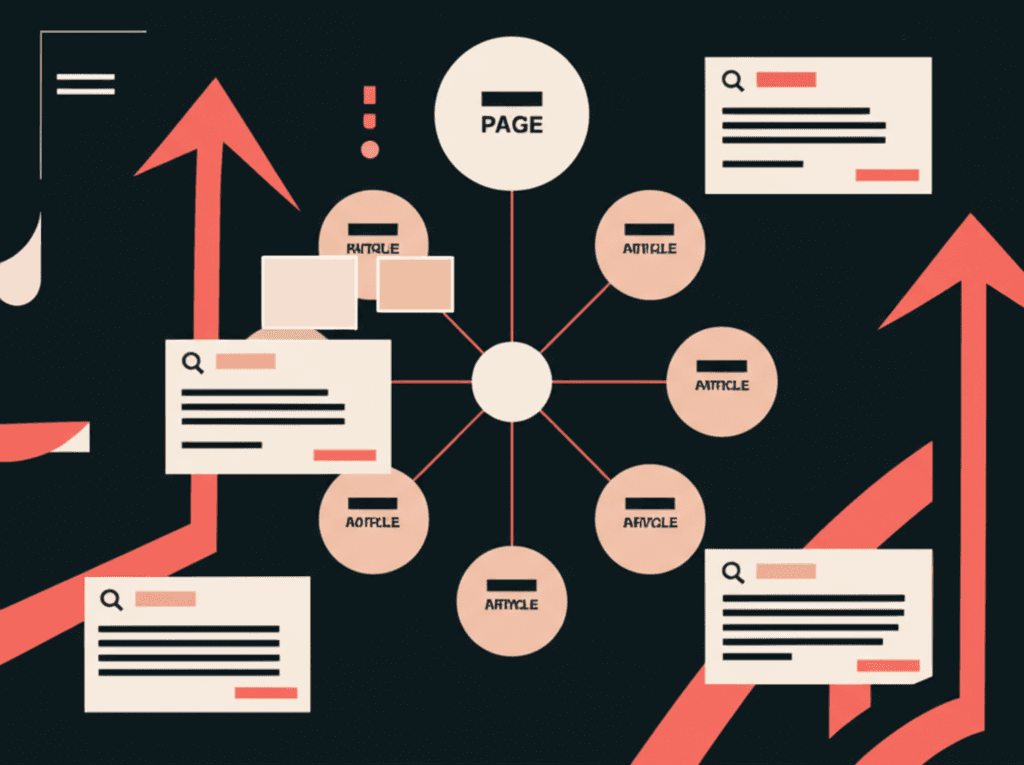
The hardest part isn't the refresh itself. It's identifying which pages to refresh. You can't refresh everything. Prioritize ruthlessly. Focus on three categories: first, high-traffic pages that are decaying (rank position dropped 3+ spots in the last 6 months). Second, pages that receive search traffic but have zero conversions (search traffic without business impact is noise). Third, cluster pages that feed your highest-value pillar pages. A pillar page loses relevance when its cluster is outdated. Refresh the cluster to protect the pillar.
AI Overviews are creating new urgency around freshness. Content decay in AI Overviews isn't gradual—pages that had consistent traffic now disappear from AI-generated answers immediately. This means your refresh cadence needs to account for this new mechanism. A page that's not cited in AI Overviews is getting less indirect traffic even if SERP position looks fine. You need to actively monitor whether your content is being cited in AI Overviews, not just track SERP position.
Use your Blog Quality Analyzer to evaluate whether older pages are showing freshness issues—outdated stats, discontinued tools, references to past events, missing current frameworks. This gives you a refresh roadmap. Then implement a calendar system: high-priority pages quarterly, mid-tier pages semi-annually, supporting pages annually. This prevents the cliff-dive.
Content Structure for Buyers: Matching Journey Stage to Information Need
Not all content should be the same. A researcher in the awareness stage doesn't need to see your pricing page. A prospect ready to buy doesn't need a "what is content marketing?" explainer. Yet most B2B companies publish content as if all readers are the same person at the same moment. This is why B2B service pages convert at 2.7% when they should be converting at 5%+ if structured correctly.
The solution is segmented content architecture mapped to buyer journey stages. The traditional B2B journey has three major stages: Awareness, Consideration, and Decision. Each stage has different information needs, different emotional drivers, and different conversion actions.
Awareness-stage content should answer foundational questions. "What is [concept]?" "Why does [problem] happen?" "How is [industry] changing?" This content attracts researchers, trend-followers, and people encountering a problem for the first time. Your audience here is broad and uninformed. They don't know your company exists. They're not ready to buy anything. The goal is to be helpful, build trust, and capture them for later nurturing. Examples: educational blog posts, trend reports, beginner's guides, industry research. When touchpoints like blog content and social media in the awareness stage are optimized, they serve as effective top-of-the-funnel content. The conversion metric here isn't purchases. It's email capture, newsletter signup, or simply "spend 3+ minutes on the page" (engagement signal).
Middle-of-the-funnel content—webinars, case studies, and ROI calculators—directly correlates with lead generation and moves prospects from awareness to active consideration. Prospects at this stage know they have a problem. They're evaluating solutions. The question isn't "do I need this?" but "which vendor should I choose?"
Consideration-stage content addresses solution evaluation. "How to implement [solution]," "Comparison: [your approach] vs. [alternative approach]," "Case study: how [company] solved [specific problem]," "ROI calculator for [your solution type]." This content is consumed by people who've already decided they need to act. They're gathering information to choose the right solution. Your goal is to position your approach as the best fit. This is where you show expertise, stack examples against competitors, and make your differentiation obvious. Conversion here is a demo request, sales call, or free trial signup. Buyers at the consideration stage engage with solution briefs, comparison guides, case studies, and product simulations before requesting demos or engaging sales teams.
Decision-stage content removes final objections. "Pricing guide," "Security and compliance documentation," "Customer testimonials," "Implementation timeline." Prospects here have narrowed to 2-3 vendors. They're looking for final reassurance. Your role is to make choosing you a no-brainer. This is where social proof matters most. Customer testimonials aren't convincing at the awareness stage. They're critical at the decision stage. Success metrics: conversion rate (% of visitors who request pricing or book a demo), deal acceleration (time from decision-stage content consumption to signed contract).
The mistake most teams make is creating one version of each topic and expecting it to work across all stages. A "product comparison" page written for decision-stage buyers (focused on pricing and feature comparison) will fail at the awareness stage (potential customer doesn't know why they should care about the features). Instead, create three versions: awareness-stage comparison ("why comparison matters"), consideration-stage comparison ("detailed feature breakdown"), decision-stage comparison ("your vendor selection guide"). Same topic. Different structures. Different goals.
With a detailed buyer journey map, you can tailor content and interactions to match prospects' journey stages, and journey mapping breaks down silos between marketing and sales teams. Most B2B companies lack alignment here. Sales says prospects ask about ROI. Marketing publishes another blog post about industry trends. Neither team understands what the other needs. The fix is shared journey mapping. Sit with sales. Map out what information moves a prospect from stage to stage. What questions accelerate deals? What content confuses the buying process? What information objections actually get resolved by self-serve content vs. sales conversation? Then build your content roadmap around these buyer needs, not publishing calendar whims.
Use your Service Page Generator to structure decision-stage pages that map buyer questions to your positioning. Use your Headline Scorer to validate that awareness-stage content uses language that reaches uninformed searchers, while decision-stage content speaks directly to purchase intent.
Measurement That Matters: Performance Validation Beyond Vanity Metrics
Most content teams measure the wrong things. Page views, time on page, bounce rate—these metrics feel significant but reveal nothing about whether your content is working. A post that gets 10,000 views but drives zero revenue is not a success story. It's a waste of resources wrapped in a flattering vanity metric.
The audit framework that actually matters is simpler: Does this content drive the business outcomes we care about? For most B2B companies, that's revenue. Not awareness (though that contributes). Not engagement (though that's a signal). Revenue.
58% of B2B marketers report an increase in sales and revenue thanks to content marketing. But here's the brutal stat: 56% of B2B marketers say difficulty attributing ROI to content efforts, and the same number cite difficulty tracking customer journeys. You can't optimize what you can't measure.
SEO generates extraordinary returns with 748% ROI for B2B organizations, far exceeding other digital channels. But this ROI is invisible if you don't instrument measurement correctly. You need to close the loop between content consumption and revenue outcome. This means tracking: which content pieces drive the most qualified leads, which pieces have the highest conversion rates to customers, which pieces accelerate sales cycles, and which pieces drive revenue volume.
Set up four measurement layers. First: search performance metrics. These are table stakes. Organic traffic volume, keyword ranking position for target keywords, click-through rate from search results, search visibility trend. These metrics validate whether your content is discoverable. Without search traffic, everything else is irrelevant. Second: engagement metrics. These validate whether content is resonant once people arrive. Time on page (pages with higher engagement typically have stronger E-E-A-T signals), pages-per-session (is this content part of a cluster journey?), scroll depth (are people reading past the headline?). Third: conversion metrics. Lead form submissions, newsletter signups, demo requests, content download. Not every content piece will drive conversions. Awareness-stage content rarely does. But consideration-stage and decision-stage content should. If it's not, something is structurally wrong. Fourth: revenue metrics. This is the hardest to track but most important. Which content pieces do customers consume before converting? Which content pieces accelerate sales cycles? Which pieces lower deal risk (customers who've read your implementation guide have fewer implementation issues)? These require CRM integration and sales team cooperation.
For measurement to work, establish baseline metrics before you publish. For a new piece of content targeting a specific keyword, what's the target monthly search traffic? Target ranking position? Target conversion rate? Then measure against that baseline monthly. If you publish a post targeting "content ROI measurement frameworks" and your hypothesis is "sales reps will share this with skeptical prospects to justify content budgets," measure whether the post actually shows up in deals as a shared asset. If it doesn't, your hypothesis was wrong.
Create a content performance dashboard. Most teams use Google Analytics, but GA is useless without context. You need to layer in: ranking data (Google Search Console), competitive positioning (are you actually winning against competitors?), lead quality data (not all leads are equal), customer journey data (did this content piece matter in the buying process?). This requires integration between your analytics system, search tools, CRM, and sales coaching notes. It's friction-heavy to set up, but it's the only way to audit whether your content strategy is actually generating business value.
The final piece is feedback velocity. Don't measure content performance once per quarter. Measure weekly for high-priority pieces. If a piece isn't gaining traction after month one, make a decision: revise it, reposition it, or kill it. Organizations that actively use data and user feedback to validate content performance iterate faster and compound advantage against competitors. Complacency is death in B2B content. The moment you stop validating, you start decaying.